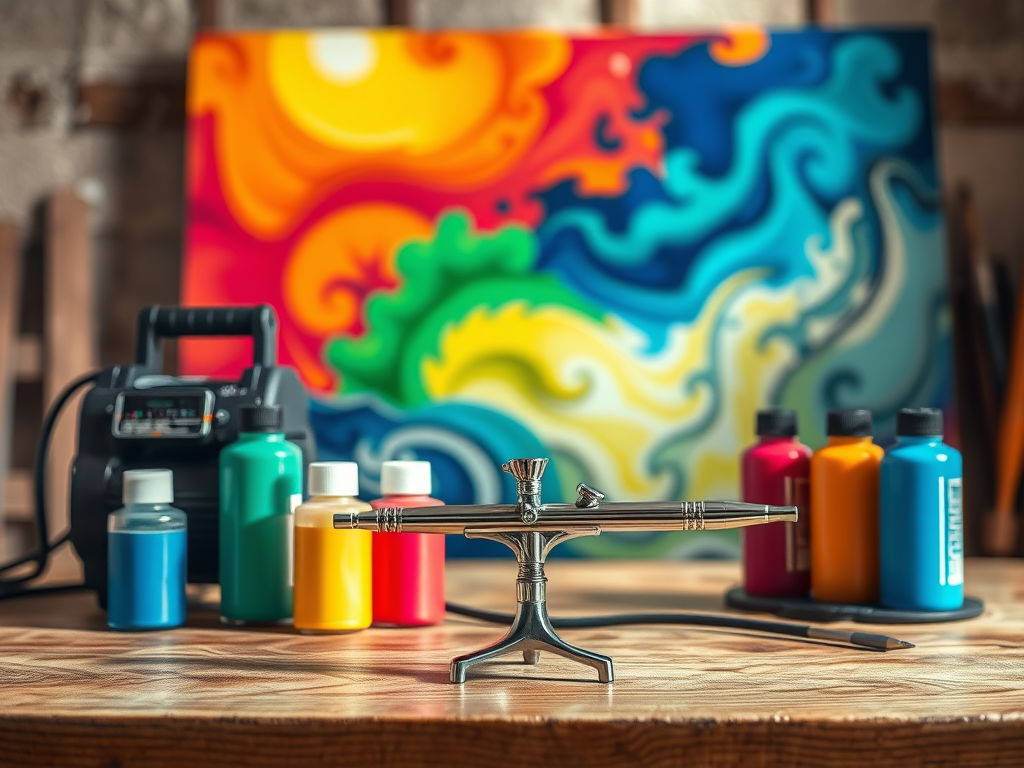
An Encouraging Guide for New Airbrush Artists
Are you fascinated by the stunningly smooth gradients and intricate details created by airbrush artists? You can paint custom designs on helmets. You can create hyper-realistic portraits. Crafting dazzling murals is also possible. Mastering the art of airbrushing in 2025 is well within your reach. In this guide, we’ll cover essential airbrushing basics. We will discuss selecting the right tools. You will also learn about understanding paints and getting the perfect compressor setup. Let’s dive in!
1. Choosing the Right Airbrush for Beginners
When starting out, the world of airbrushes can feel overwhelming, but don’t worry! Here’s what to consider:
Single-Action vs. Dual-Action Airbrushes
• Single-Action Airbrush: Controls only the airflow, making it easier for beginners to use. Great for simple tasks like stenciling or base coats.
• Dual-Action Airbrush: Controls both airflow and paint flow, giving you more versatility and control. While it has a steeper learning curve, it’s the go-to for most artists as it allows for detailed work.
Pro Tip: Start with a dual-action airbrush. Brands like Iwata, Badger, and Paasche offer beginner-friendly models that balance quality and affordability.
Gravity Feed vs. Siphon Feed
• Gravity Feed: It has a paint cup on top. This setup requires less air pressure. It is ideal for fine detail work.
• Siphon Feed: Uses bottles or cups attached below the airbrush, better suited for larger projects.
If you’re new, a gravity-feed airbrush is a fantastic starting point. Models like the Iwata Eclipse HP-CS are popular among new airbrush artists.
2. Choosing the Right Paints
Airbrushing for beginners often involves experimenting with paints, but not all paints are created equal. Here’s how to pick the right one:
Types of Paint
• Acrylic Paints: Water-based, easy to clean, and versatile for most projects. Look for paints specifically formulated for airbrushing to avoid clogging your airbrush.
• Urethane Paints: Commonly used in automotive and custom work. They offer a smooth finish but need proper ventilation and protective gear due to their toxicity.
• Inks and Dyes: Ideal for fine detail work, offering vibrant colors and easy flow.
Pro Tip: For beginners, start with acrylic paints like Createx Colors or Vallejo Air. They’re forgiving, widely available, and perfect for learning airbrushing basics.
3. The Importance of a Good Air Compressor
A reliable compressor is the backbone of any airbrushing setup. Without steady airflow, even the best airbrush won’t work well.
What to Look For in a Compressor
• Adjustable Pressure: You’ll need to control PSI (pounds per square inch) depending on your project. Most airbrushing tasks require 15-40 PSI.
• Tank vs. Tankless:
• Tank Compressors: Supply consistent airflow and are quieter, making them ideal for detailed work.
• Tankless Compressors: Compact and affordable but may lead to inconsistent airflow.
• Noise Level: Choose a quiet model if you’re working in a shared or indoor space.
Recommended Models: The Master Airbrush TC-320 is a budget-friendly option with a tank. The Sparmax TC-620X is a high-quality, quieter choice.
4. Setting Up Your Workspace
A comfortable and organized workspace is crucial for practicing and improving your airbrushing skills.
Essentials for Your Setup
• Ventilation: Use a spray booth or work in a well-ventilated area, especially when using solvent-based paints.
• Lighting: Invest in bright, adjustable lighting to clearly see your work.
• Cleaning Station: Keep cleaning supplies like airbrush cleaner, soft brushes, and microfiber cloths handy to maintain your tools.
5. Airbrushing Tips for Beginners
Here are a few airbrushing tips to help you on your journey:
• Start Small: Practice on inexpensive surfaces like paper, canvas, or scrap metal before moving on to complex projects.
• Master the Basics: Learn control exercises like spraying consistent dots, lines, and gradients. These foundational skills are essential for more advanced techniques.
• Thin Your Paint: Always thin your paint to the consistency of milk for smooth application. Follow manufacturer recommendations for thinning ratios.
• Clean After Every Session: A clean airbrush ensures consistent performance and extends the life of your equipment.
6. Finding Inspiration and Building Confidence
Every airbrush artist started as a beginner. The key is to keep practicing and exploring your creativity. Social media platforms like Instagram and TikTok offer numerous airbrushing tips and tutorials. They showcase inspiring work from other new airbrush artists.
Consider joining online communities like Facebook groups or Reddit forums focused on airbrushing for beginners. Connecting with others can help you stay motivated and get valuable feedback.
7. Your 2025 Airbrushing Journey Starts Now
With the right tools, paints, and determination, you can master the art of airbrushing. Remember, progress takes time, so celebrate every milestone along the way.
Whether you’re airbrushing as a hobby or you want to turn it into a professional craft, 2025 is the perfect time to start. Dive into this exciting journey. Embrace the journey, and soon, you’ll be creating works of art that leave others in awe.
Happy airbrushing!
Did you find these airbrushing tips helpful? Share your thoughts or ask questions in the comments below!
 Niver’s blog
Leave a comment